
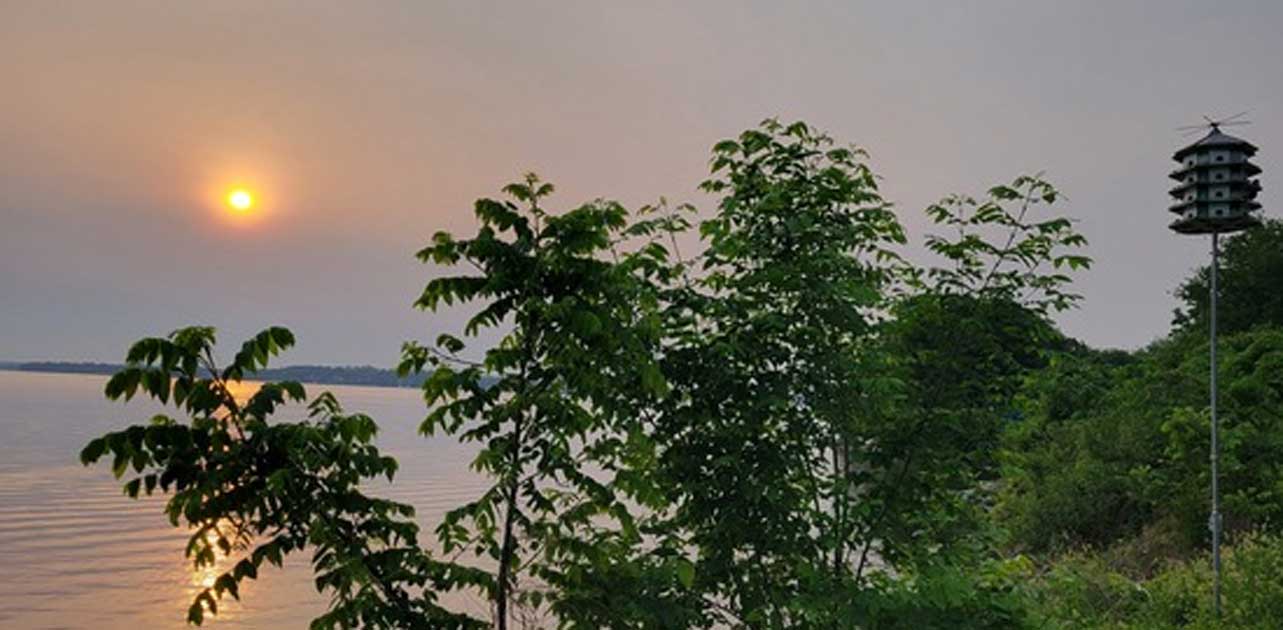
UPPER PENINSULA, MI (OnFocus) – Smoke from large wildfires burning in Canada continues to impact air quality across much of the Upper Midwest, prompting air quality alerts and health concerns for many residents.
The current smoke is primarily coming from ongoing wildfires in Canada, including parts of Ontario, Manitoba, Saskatchewan and the Northwest Territories. Weather patterns have carried the smoke hundreds of miles south, creating widespread haze and periods of unhealthy air quality across the Upper Midwest.
Wildfire smoke contains fine particulate matter (PM2.5), tiny particles that can travel deep into the lungs and even enter the bloodstream. Exposure can worsen asthma and other chronic lung diseases, increase the risk of heart-related complications, and irritate the eyes, nose and throat, particularly among children, older adults, pregnant women and people with underlying health conditions.
“The impact of poor air quality cannot be overstated,” said Tony Malik, MD, Hospitalist for Aspirus Health. “Whenever we have poor air quality, it can cause exacerbation or flare-ups for people with chronic lung diseases, coronary artery diseases and other chronic diseases.”
Aspirus Health encourages residents to take steps to protect themselves whenever wildfire smoke affects the region.
- Know the Air Quality Index (AQI) where you live before spending extended time outdoors.
- Limit prolonged or strenuous outdoor activity when air quality reaches unhealthy levels.
- Keep windows and doors closed when smoke levels are elevated.
- Use a high-efficiency air filter or portable HEPA air purifier if available.
- If you must be outdoors for extended periods in heavy smoke, consider wearing a properly fitted N95 respirator.
- Avoid adding to air pollution by postponing brush burning, campfires and other outdoor burning during poor air quality events.
“Summer is a time when people naturally want to be outdoors, whether it’s camping, exercising or doing yard work,” said Dr. Malik. “When air quality is poor, it’s best to postpone those activities if possible or reduce the amount of time you spend outside. If you have asthma or another chronic lung condition, be sure to have your medications readily available and contact your health care provider if your symptoms worsen.”
Residents experiencing persistent coughing, shortness of breath, chest pain, wheezing or other concerning symptoms should seek medical attention promptly.
Air quality conditions can change quickly depending on weather patterns and wildfire activity. Residents are encouraged to monitor local air quality forecasts and take appropriate precautions until smoke conditions improve.

Author: News Desk
This piece was posted by our news team! Contact us or submit stories at [email protected].